Entry-level smartphone market shrinks 59% – The Times of India
NEW DELHI: India’s entry-level smartphone market suffered a collapse in the first quarter of 2026. Rising component costs and weakening consumer demand reshaped the country’s handset landscape, according to new data from IDC.India’s overall smartphone shipments declined 4.1% year-on-year to 31 million units in Q1 2026, but the steepest pressure was concentrated in devices priced below sub-Rs 10,000 ($100). Shipments in the entry-level segment plunged 59% from a year earlier, with the category’s market share shrinking from 18% to just 8%.IDC said rising global memory prices made it increasingly difficult for brands to sustain profitability in the low-cost category, forcing companies to cut launches and reduce channel participation in the segment.“Device makers relying on entry-level volume face shrinking margins and reduced market viability as memory costs continue to rise,” the research firm said in its report.
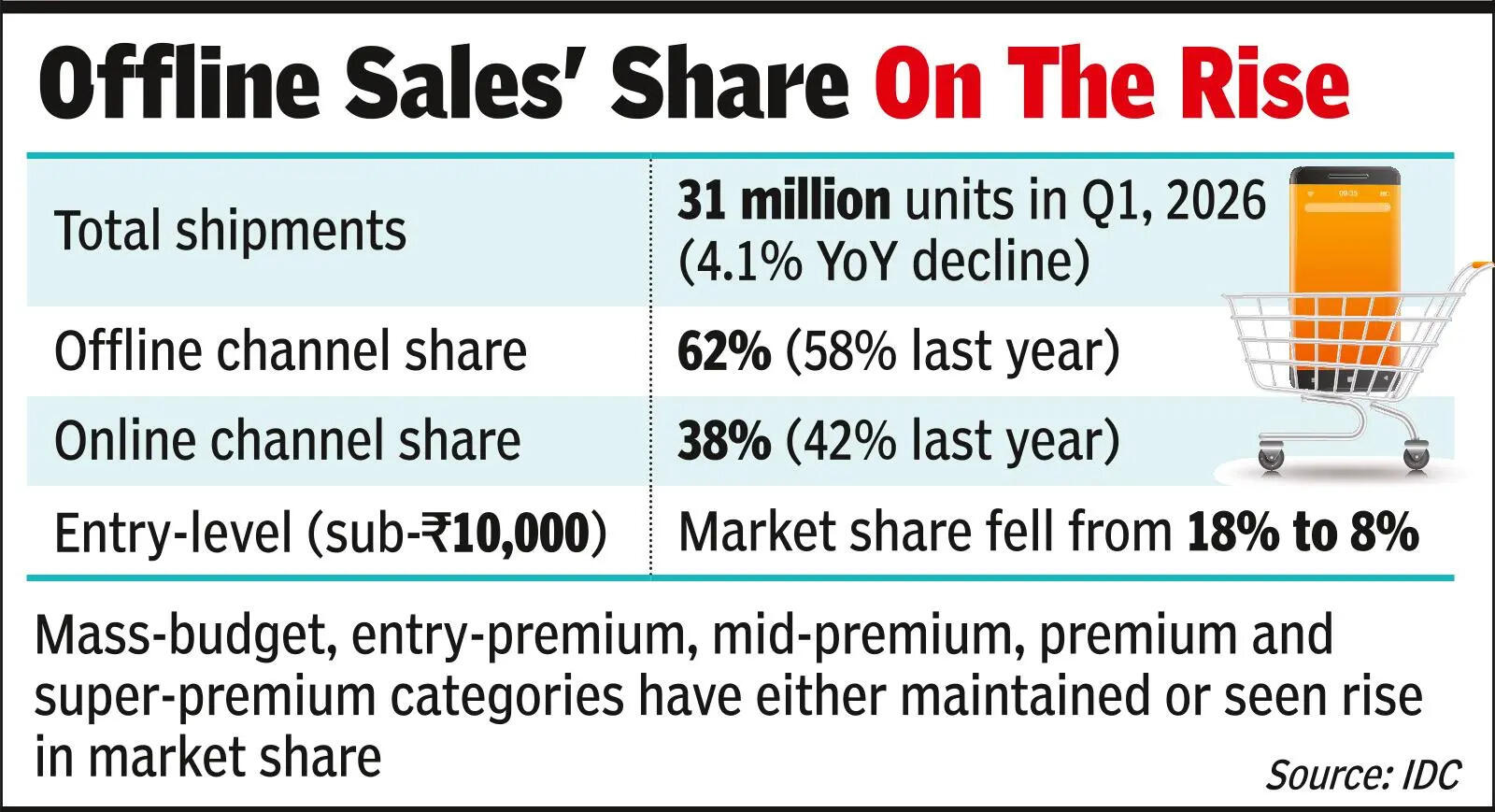
The squeeze at the bottom end of the market is also changing consumer buying behaviour. IDC noted that many buyers who traditionally purchased sub-Rs 10,000 smartphones were pushed into higher price brackets because affordable options were no longer widely available.That helped the Rs 10,000-Rs 20,000 ($100–200) “mass-budget” segment grow 10% year-on-year, increasing its market share from 39% to 45%. IDC described the trend as “forced premiumisation”, driven less by upgrade aspirations and more by price inflation in the affordable category.The broader market continued shifting towards higher-value devices, despite softer overall demand. India’s average smartphone selling price rose 10.4% year-on-year to a record Rs 30,000 ($302) during the quarter.At the same time, online channels weakened considerably as brands scaled back discounts and promotional offers that had traditionally driven volumes in affordable smartphones. Online shipments fell 14% Y-oY, reducing the channel’s share from 42% to 38%, while offline retail expanded to 62% of the market.