Elon Musk’s secret hiring formula revealed by ex-Tesla president: ‘Hire people willing to…’
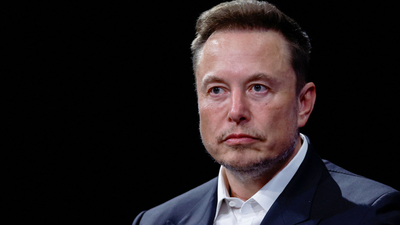
Building electric cars, reusable rockets and artificial intelligence systems requires more than technical expertise alone. Reflecting on his years working alongside Elon Musk during one of Tesla’s most turbulent growth periods, Jon McNeill said Musk’s success came partly from an unusually demanding hiring philosophy. Rather than simply recruiting highly qualified employees, Musk looked for people willing to tackle problems others considered impossible. McNeill’s comments, shared while discussing his book The Algorithm, have offered a rare inside look at the culture, mindset and relentless pace that helped transform Tesla from a struggling automaker into one of the world’s most influential technology companies.
The hiring philosophy behind Elon Musk’s companies
According to McNeill, one of Musk’s core beliefs is that exceptional companies are built by exceptional people.“He demands to only work with world-class talent,” McNeill said, describing the type of employees Musk values as “10Xers,” workers capable of producing results far beyond what average employees can achieve.Rather than focusing only on credentials or experience, McNeill said Musk looked for people who embraced difficult challenges instead of avoiding them. The employees who succeeded most often at Tesla were not necessarily those who already had every answer, but those willing to confront uncertainty and solve problems under pressure.According to McNeill, the mindset that stood out most was simple: “Challenge accepted. We’ll figure it out.”
The four traits Musk values most
McNeill said the employees who thrived inside Musk-led companies often shared four key characteristics: humility, capability, confidence and curiosity.Humility mattered because strong employees admitted when they did not know something rather than pretending expertise. Capability referred to technical skill and problem-solving ability. Confidence allowed workers to pursue ambitious goals without becoming paralysed by risk, while curiosity helped teams constantly question assumptions and search for better solutions.McNeill suggested that this combination created teams capable of handling the intense pace and uncertainty that defined Tesla’s growth years.
Tesla’s ‘impossible’ years
McNeill served as Tesla president between 2015 and 2018, a period often described as one of the company’s most difficult chapters. During that time, Tesla launched the Model X and struggled through the chaotic production ramp-up of the Model 3, a phase Elon Musk famously referred to as “production hell.”The company faced severe manufacturing bottlenecks, mounting financial pressure and fears that Tesla could run out of money. According to McNeill, Musk’s insistence on moving quickly and solving problems aggressively became central to the company’s survival.Tesla’s workforce was expected to operate with extraordinary speed, often under immense pressure and tight deadlines.
The five-step framework Musk used
McNeill also described a five-step operational system that he later outlined in his book The Algorithm. He said the framework shaped how Musk approached manufacturing and problem-solving inside Tesla.The process began with questioning every requirement instead of accepting existing systems automatically. Employees were then encouraged to remove unnecessary steps, simplify workflows and optimise production processes before attempting to accelerate manufacturing speed. Only after those stages did Musk believe automation should be introduced.The final point surprised many people because Musk is often associated with automation and futuristic technology. However, McNeill said Musk believed companies should first fully understand and simplify processes before automating them.The framework reportedly helped Tesla reduce inefficiencies and scale production during critical growth years.
A leadership philosophy influencing Silicon Valley
The ideas described by McNeill reflect a broader philosophy shared by many technology leaders: attitude and adaptability can matter just as much as intelligence or qualifications.Executives across Silicon Valley increasingly emphasise traits such as resilience, curiosity and initiative when hiring employees, particularly in fast-moving industries shaped by artificial intelligence and rapid technological change.For Musk, according to McNeill, the key difference was the scale of ambition. Employees were not simply expected to complete tasks efficiently. They were expected to challenge assumptions, move quickly and attempt things many companies would consider unrealistic.That mindset, McNeill suggested, became one of the defining forces behind Tesla’s rise.